What is Activated Alumina? Properties, Benefits, Uses & Comparison
Time:2026-08-25
Activated alumina is a highly porous form of aluminum oxide (Al₂O₃) widely used as an adsorbent, desiccant, water-treatment media, and catalyst support. Unlike dense aluminum oxide used primarily for ceramics, abrasives, and refractory materials, activated alumina is engineered to have a large internal surface area and a network of microscopic pores. These characteristics give it a strong ability to adsorb water, fluoride, arsenic, and other polar contaminants.
In simple terms, activated alumina is a porous aluminum oxide material designed to capture moisture and selected contaminants from gases and liquids. Its combination of adsorption performance, mechanical strength, thermal stability, regenerability, and relatively low operating cost makes it an important material in industrial gas drying, compressed-air treatment, drinking-water purification, petrochemical processing, and environmental applications.
1. What Is Activated Alumina?
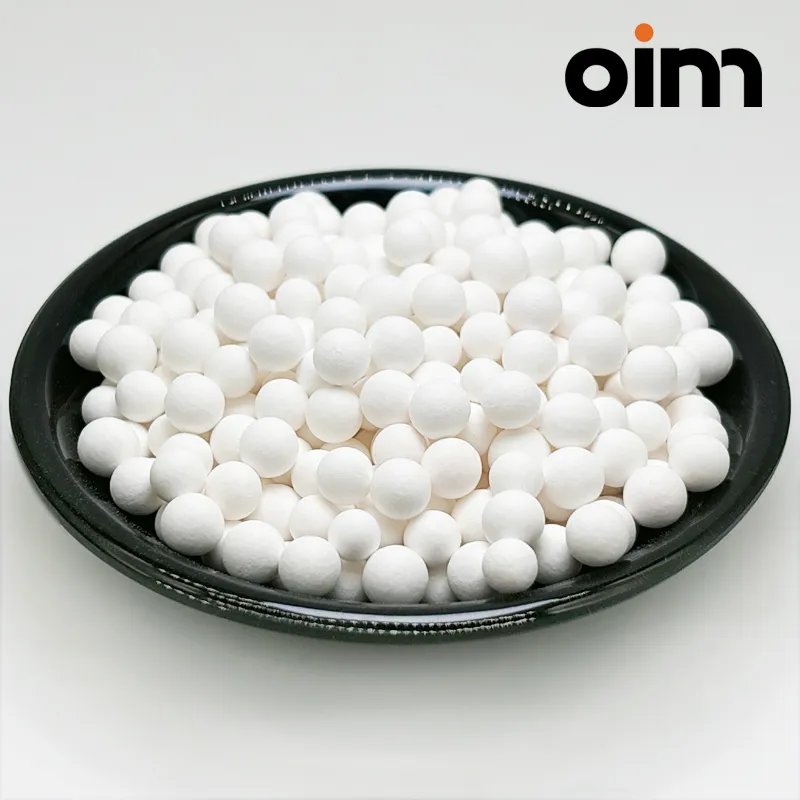
Activated alumina is generally produced by thermally treating hydrated aluminum compounds, such as aluminum hydroxide. During activation, part of the chemically bound water is removed, creating a porous transition-alumina structure with a much larger surface area than ordinary dense alumina. Commercial activated alumina commonly contains transition phases such as gamma-alumina rather than the dense alpha-alumina structure found in corundum.
The key difference is therefore porosity.
Dense aluminum oxide has relatively limited accessible internal surface area, while activated alumina contains numerous microscopic pores and channels. Depending on its manufacturing process and grade, its specific surface area can reach hundreds of square meters per gram. These pores provide abundant active sites where water molecules and other substances can attach to the surface.
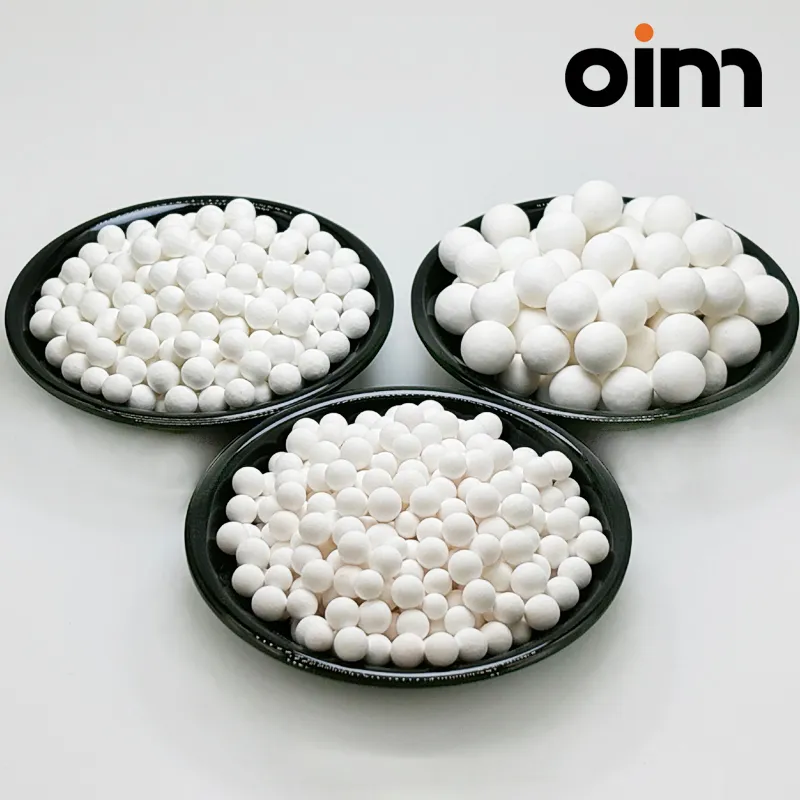
Activated alumina is commonly supplied as:
- Spherical beads
- Pellets
- Granules
- Powder
- Customized catalyst-support shapes
The particle size and pore structure are selected according to the intended application.
Activated Alumina vs. Aluminum Oxide
It is important to understand that activated alumina is not simply another name for all aluminum oxide.
Aluminum oxide is the broad chemical family represented by Al₂O₃. Activated alumina refers specifically to porous, high-surface-area alumina prepared for adsorption and related applications.
This distinction is important when purchasing the material. A standard alumina ceramic or abrasive-grade aluminum oxide is not automatically suitable for use as a desiccant or water-treatment adsorbent.
2. How Does Activated Alumina Work?
Activated alumina primarily works through adsorption, rather than absorption.
During adsorption, molecules accumulate on the internal and external surfaces of the porous material. Because activated alumina has a large surface area and strong affinity for polar molecules, water can be captured efficiently from air, compressed gases, and certain liquid streams.
Its adsorption behavior is influenced by several factors, including:
- Temperature
- Relative humidity
- Pressure
- Contact time
- Gas or liquid composition
- Particle size
- Pore volume
- Surface area
- pH in water-treatment applications
For gas drying, water molecules enter the pores and attach to active surface sites. When the material becomes saturated, it can often be regenerated by heating or another appropriate regeneration process, allowing it to be reused.
This regenerability is one of the reasons activated alumina is attractive for industrial systems operating continuously.
3. Key Properties of Activated Alumina
3.1 High Specific Surface Area
The most important property of activated alumina is its high internal surface area.
Transition alumina used for adsorption can have a surface area in the approximate range of 200–400 m²/g, depending on grade and manufacturing process. Its porous structure creates many adsorption sites for water and other molecules.
A high surface area generally contributes to better adsorption performance, although surface area alone should not be used to determine product quality. Pore-size distribution, pore volume, surface chemistry, particle strength, and operating conditions are also important.
3.2 Strong Affinity for Water
Activated alumina is highly hydrophilic, meaning that it has a strong affinity for water.
This makes it particularly useful for:
- Compressed-air drying
- Instrument-air drying
- Industrial gas drying
- Natural-gas treatment
- Process-gas purification
- Moisture control
It can remove water from gas streams without requiring a liquid chemical drying agent.
3.3 Good Mechanical Strength
Industrial activated alumina is often manufactured into hard spheres or pellets.
Compared with some softer adsorbents, high-quality activated alumina can provide good resistance to crushing and abrasion. This is particularly valuable in fixed-bed adsorption systems where the media must withstand pressure, vibration, repeated regeneration, and gas flow.
Mechanical strength directly affects:
- Service life
- Pressure drop
- Dust generation
- Equipment maintenance
- Replacement frequency
3.4 Thermal Stability
Activated alumina can operate across relatively demanding temperature ranges and can be thermally regenerated.
This is a major advantage in industrial drying systems because the adsorbent does not necessarily need to be discarded after saturation. Instead, controlled heating can remove the adsorbed moisture and restore part of its adsorption capacity.
3.5 Regenerability
One of the biggest economic advantages of activated alumina is its ability to be regenerated.
A typical adsorption cycle can include:
- Adsorption
- Saturation
- Regeneration
- Cooling
- Reuse
The exact regeneration temperature and process depend on the grade, contaminants, dryer design, and required performance.
This makes activated alumina particularly suitable for continuous industrial adsorption systems.
3.6 Chemical Stability
Activated alumina has good chemical and thermal stability in many industrial environments. However, it is not universally resistant to every chemical, and its performance can change significantly with pH and competing contaminants.
Therefore, material compatibility should always be evaluated before selecting activated alumina for a specific process.
4. Main Advantages of Activated Alumina
Activated alumina offers several advantages that explain its widespread use.
1. Excellent moisture adsorption
Its porous structure and hydrophilic surface make it effective for removing water from gases.
2. Good mechanical durability
Spherical and pelletized grades can withstand repeated industrial operation with relatively low attrition.
3. Regenerable
Instead of being discarded after saturation, many grades can be regenerated and reused.
4. Versatile applications
The same basic material can be engineered for gas drying, water purification, catalyst support, and other adsorption processes.
5. Good thermal stability
Activated alumina can be used in applications where temperature resistance is important.
6. Effective contaminant removal
Specialized activated alumina can adsorb contaminants such as fluoride and arsenic from water. The U.S. EPA's HERO database describes activated alumina as a reliable and cost-effective process for treating excess fluoride in drinking-water supplies.
7. Long service potential
When correctly selected, installed, and regenerated, activated alumina can operate through many adsorption cycles.
5. Major Applications of Activated Alumina
5.1 Compressed Air Drying
Compressed air often contains significant amounts of water vapor. If this moisture is not removed, it can cause corrosion, freezing, equipment damage, and product-quality problems.
Activated alumina is therefore widely used in regenerative compressed-air dryers.
Typical applications include:
- Instrument air
- Pneumatic equipment
- Factory compressed air
- Control systems
- Industrial automation
- Process air
Its mechanical durability and regenerability make it suitable for repeated adsorption and regeneration cycles.
5.2 Industrial Gas Drying
Activated alumina can be used to remove moisture from gases such as:
- Nitrogen
- Oxygen
- Hydrogen
- Natural gas
- Process gases
- Instrument gases
In gas-treatment systems, activated alumina can serve as the primary drying medium or as a pre-treatment/guard bed before a deeper-drying adsorbent.
The correct choice depends on the required outlet moisture level and dew point.
5.3 Water Treatment
Water treatment is one of the most distinctive applications of activated alumina.
Activated alumina can selectively adsorb certain dissolved contaminants, especially fluoride. It can also be used for the removal of certain forms of arsenic and other anionic contaminants under appropriate operating conditions.
Fluoride removal is particularly important in areas where naturally occurring fluoride concentrations exceed acceptable drinking-water limits.
Activated alumina systems can be configured as fixed-bed columns through which water passes. Over time, the adsorption capacity is consumed, and the media may be regenerated or replaced depending on the system design.
Importantly, activated alumina does not remove every contaminant from water. Its performance depends strongly on pH, competing ions, contaminant concentration, contact time, and media characteristics.
5.4 Catalyst Support
Activated alumina is also widely used as a catalyst carrier.
Its high surface area provides a large platform for distributing active catalytic components. Its pore structure allows reactants to contact catalytic sites efficiently.
Applications can be found in:
- Petrochemical processing
- Hydrogen peroxide production
- Sulfur recovery
- Refining
- Chemical processing
- Environmental catalysis
The material's combination of surface area, pore structure, thermal stability, and mechanical strength makes it useful as a catalyst support.
5.5 Oil and Transformer Applications
Specialized activated alumina can be used in systems where moisture control is important for insulating oils and electrical equipment.
Moisture can negatively affect electrical insulation performance, so adsorption media can help control water in certain maintenance and purification systems.
The exact media specification must match the oil type and purification equipment.
5.6 Pharmaceutical and Chemical Processing
Activated alumina can be used as an adsorbent or catalyst support in chemical and pharmaceutical processes.
However, applications involving pharmaceuticals, food, or drinking water require appropriate grades and compliance documentation. Industrial-grade activated alumina should not automatically be assumed suitable for direct-contact applications.
6. Activated Alumina vs. Silica Gel
Silica gel is another widely used desiccant. Both materials remove water through adsorption, but their strengths are different.
| Property | Activated Alumina | Silica Gel |
|---|---|---|
| Chemical composition | Al₂O₃ | SiO₂ |
| Structure | Porous alumina | Porous silica |
| Main use | Industrial drying and purification | General moisture control |
| Mechanical strength | Generally high | Depends strongly on grade |
| Thermal stability | Good | Generally lower |
| Regeneration | Yes | Yes |
| Water treatment | Excellent for selected contaminants | Limited |
| High-humidity adsorption | Good | Often excellent |
| Deep drying | Good | Moderate |
| Catalyst support | Excellent | Also widely used |
| Industrial gas drying | Excellent | Good |
Silica gel often has an advantage in general moisture-control applications because of its high water capacity at higher relative humidity. Activated alumina, however, is often preferred in demanding industrial drying systems because of its mechanical durability, thermal stability, and resistance to certain operating conditions.
Therefore, it is incorrect to say that activated alumina is always better than silica gel.
Choose based on the operating conditions rather than simply comparing adsorption capacity.
7. Activated Alumina vs. Molecular Sieve
Molecular sieve is another major industrial desiccant.
The fundamental difference is structure.
Activated alumina has a porous transition-alumina structure with a relatively broad pore distribution. Molecular sieves, in contrast, have highly controlled crystalline pore openings that can provide molecular-size selectivity.
| Property | Activated Alumina | Molecular Sieve |
| Structure | Porous alumina | Crystalline zeolite |
| Water adsorption | High | Very high at low humidity |
| Pore selectivity | Limited | Excellent |
| Deep drying | Good | Excellent |
| Low dew point | Good | Excellent |
| Mechanical strength | Good | Good to excellent |
| Regeneration | Yes | Yes |
| Cost | Often moderate | Often higher |
| Water-treatment applications | Strong | Limited for this purpose |
| Best application | General industrial drying | Deep dehydration |
Molecular sieve is generally the better choice when a process requires extremely low residual moisture or very low dew points. Activated alumina is often a better choice when the goal is robust, economical bulk drying.
In some systems, the two materials are used together rather than treated as competitors. Activated alumina can remove bulk moisture or protect downstream molecular sieve from liquid-water carryover, while molecular sieve performs final deep drying.
8. Activated Alumina vs. Activated Carbon
Activated alumina and activated carbon are both porous adsorbents, but they are designed for different adsorption targets.
Activated carbon has a carbon-based porous structure and is particularly effective for many organic compounds, odors, hydrocarbons, and certain gases.
Activated alumina is an inorganic aluminum-oxide adsorbent with strong affinity for water and selected inorganic contaminants.
| Property | Activated Alumina | Activated Carbon |
| Main composition | Aluminum oxide | Carbon |
| Moisture removal | Excellent | Generally limited |
| Organic contaminant removal | Limited to moderate | Excellent |
| Fluoride removal | Excellent | Generally poor |
| Odor removal | Limited | Excellent |
| Catalyst support | Excellent | Also used |
| Gas drying | Excellent | Not its primary role |
| Water treatment | Selected inorganic contaminants | Organics and some chemicals |
For moisture removal, activated alumina is normally the more appropriate choice. For organic vapor and odor removal, activated carbon is generally more suitable.
9. How to Select the Right Activated Alumina
Choosing activated alumina based only on price or surface area can result in poor system performance.
Important parameters include:
Particle Size
Common particle sizes include several millimeters, depending on the application.
Smaller particles may provide shorter diffusion paths but can increase pressure drop. Larger particles can reduce pressure drop but may alter adsorption kinetics.
Crush Strength
For industrial fixed-bed systems, mechanical strength is extremely important.
Higher crush strength can reduce:
- Particle breakage
- Dust
- Pressure drop caused by fines
- Media replacement frequency
Surface Area and Pore Volume
Higher surface area is generally beneficial, but it should be evaluated together with pore-size distribution and adsorption capacity.
Water Adsorption Capacity
Always compare adsorption capacity at the actual operating temperature and relative humidity, rather than relying solely on a single laboratory value.
Regeneration Conditions
Check the required regeneration temperature, heating method, cycle time, and expected working capacity.
Application-Specific Performance
A grade optimized for compressed-air drying may not be the best choice for fluoride removal or catalyst support.
Therefore, buyers should request application-specific technical data.
10. Limitations of Activated Alumina
Although activated alumina has many advantages, it is not a universal adsorbent.
Limited molecular selectivity
Compared with molecular sieve, activated alumina does not provide the same precise molecular-size separation.
Performance depends on operating conditions
Temperature, humidity, pressure, pH, and competing contaminants can significantly influence adsorption.
Regeneration consumes energy
Thermal regeneration requires energy and appropriate equipment.
Contaminant competition
In water treatment, competing ions can reduce adsorption capacity. For example, research summarized by ScienceDirect notes that sulfate can significantly interfere with adsorption of some target anions under certain conditions.
Not suitable for every chemical environment
Strong acids, bases, solvents, or other aggressive chemicals may affect the material or its adsorption performance.
For this reason, laboratory testing or pilot testing can be valuable before large-scale installation.
11. Is Activated Alumina Better Than Other Desiccants?
There is no single best desiccant for every application.
A practical selection guide is:
Choose activated alumina when:
- You need reliable industrial gas drying.
- Mechanical strength is important.
- The system operates continuously.
- Regeneration is required.
- Liquid-water exposure is possible.
- You need fluoride removal from water.
- You need an economical catalyst support.
Choose silica gel when:
- The main requirement is general moisture control.
- The system operates at moderate humidity.
- High moisture capacity at higher relative humidity is important.
- Low-temperature regeneration is preferred.
Choose molecular sieve when:
- Very low moisture levels are required.
- Extremely low dew points are needed.
- Deep dehydration is the main objective.
- Molecular-size selectivity is important.
This application-based approach is more useful than simply asking which material has the highest adsorption capacity.
12. Frequently Asked Questions About Activated Alumina
Is activated alumina a desiccant?
Yes. Activated alumina is widely used as an industrial desiccant because of its porous structure and strong affinity for water.
What is the chemical formula of activated alumina?
Activated alumina is primarily aluminum oxide, represented by Al₂O₃, although its actual transition-alumina structure and surface chemistry depend on manufacturing conditions.
Does activated alumina absorb or adsorb water?
Strictly speaking, activated alumina adsorbs water. Water molecules accumulate on the internal surface and within the pores rather than simply dissolving throughout the bulk material.
Can activated alumina be regenerated?
Yes. Many industrial grades can be regenerated using controlled heating or other appropriate processes. The actual regeneration conditions depend on the grade and application.
Does activated alumina remove fluoride?
Yes. Activated alumina is an established adsorption medium for fluoride removal from water, and the EPA has documented its application in drinking-water treatment.
Is activated alumina the same as silica gel?
No. Activated alumina is primarily Al₂O₃, while silica gel is primarily SiO₂. They have different pore structures, adsorption behavior, thermal characteristics, and ideal applications.
Is activated alumina better than molecular sieve?
Not universally. Activated alumina is often preferred for robust general industrial drying, while molecular sieve is generally better when extremely deep drying or very low dew points are required.
13. Conclusion
Activated alumina is a versatile porous aluminum-oxide adsorbent with a unique combination of high surface area, strong water affinity, mechanical strength, thermal stability, regenerability, and contaminant adsorption capability.
Its most important applications include compressed-air drying, industrial gas purification, water treatment, fluoride removal, catalyst support, and specialized chemical processing.
Compared with silica gel, activated alumina is often better suited to demanding industrial environments where mechanical durability and regeneration are important. Compared with molecular sieve, it offers a practical balance between drying performance, durability, and operating cost, although molecular sieve generally has an advantage when extremely low moisture levels are required. Activated carbon, meanwhile, is more appropriate for many organic contaminants and odor-control applications.
The key lesson is that activated alumina should not be selected simply because it has a high surface area or because it is called a “desiccant.” The correct product depends on the target contaminant, temperature, pressure, humidity, flow rate, required outlet specification, regeneration method, particle size, and expected service life.
For industrial buyers and engineers, the best approach is to match the activated alumina grade to the actual operating conditions and, where necessary, validate performance through laboratory or pilot testing.
In short: Activated alumina is a high-performance, regenerable porous adsorbent that provides an excellent combination of moisture removal, contaminant adsorption, durability, and versatility—making it one of the most important adsorption materials for modern industrial drying and purification systems.
Quick Takeaway
| Question | Answer |
| What is activated alumina? | A porous, high-surface-area form of aluminum oxide |
| Main formula | Al₂O₃ |
| Primary function | Adsorption |
| Main advantage | Strong moisture adsorption plus high durability |
| Main applications | Gas drying, water treatment, catalyst support |
| Fluoride removal | Yes |
| Regenerable | Yes, for many industrial grades |
| Compared with silica gel | More industrially robust in many applications |
| Compared with molecular sieve | Less selective, but often economical for bulk drying |
| Compared with activated carbon | Better for moisture and selected inorganic contaminants |
| Best selection method | Match grade and performance to actual operating conditions |
Activated alumina is a highly porous form of aluminum oxide (Al₂O₃) widely used as an adsorbent, desiccant, water-treatment media, and catalyst support. Unlike dense aluminum oxide used primarily for ceramics, abrasives, and refractory materials, activated alumina is engineered to have a large internal surface area and a network of microscopic pores. These characteristics give it a strong ability to adsorb water, fluoride, arsenic, and other polar contaminants.
In simple terms, activated alumina is a porous aluminum oxide material designed to capture moisture and selected contaminants from gases and liquids. Its combination of adsorption performance, mechanical strength, thermal stability, regenerability, and relatively low operating cost makes it an important material in industrial gas drying, compressed-air treatment, drinking-water purification, petrochemical processing, and environmental applications.
1. What Is Activated Alumina?
Activated alumina is generally produced by thermally treating hydrated aluminum compounds, such as aluminum hydroxide. During activation, part of the chemically bound water is removed, creating a porous transition-alumina structure with a much larger surface area than ordinary dense alumina. Commercial activated alumina commonly contains transition phases such as gamma-alumina rather than the dense alpha-alumina structure found in corundum.
The key difference is therefore porosity.
Dense aluminum oxide has relatively limited accessible internal surface area, while activated alumina contains numerous microscopic pores and channels. Depending on its manufacturing process and grade, its specific surface area can reach hundreds of square meters per gram. These pores provide abundant active sites where water molecules and other substances can attach to the surface.
Activated alumina is commonly supplied as:
- Spherical beads
- Pellets
- Granules
- Powder
- Customized catalyst-support shapes
The particle size and pore structure are selected according to the intended application.
Activated Alumina vs. Aluminum Oxide
It is important to understand that activated alumina is not simply another name for all aluminum oxide.
Aluminum oxide is the broad chemical family represented by Al₂O₃. Activated alumina refers specifically to porous, high-surface-area alumina prepared for adsorption and related applications.
This distinction is important when purchasing the material. A standard alumina ceramic or abrasive-grade aluminum oxide is not automatically suitable for use as a desiccant or water-treatment adsorbent.
2. How Does Activated Alumina Work?
Activated alumina primarily works through adsorption, rather than absorption.
During adsorption, molecules accumulate on the internal and external surfaces of the porous material. Because activated alumina has a large surface area and strong affinity for polar molecules, water can be captured efficiently from air, compressed gases, and certain liquid streams.
Its adsorption behavior is influenced by several factors, including:
- Temperature
- Relative humidity
- Pressure
- Contact time
- Gas or liquid composition
- Particle size
- Pore volume
- Surface area
- pH in water-treatment applications
For gas drying, water molecules enter the pores and attach to active surface sites. When the material becomes saturated, it can often be regenerated by heating or another appropriate regeneration process, allowing it to be reused.
This regenerability is one of the reasons activated alumina is attractive for industrial systems operating continuously.
3. Key Properties of Activated Alumina
3.1 High Specific Surface Area
The most important property of activated alumina is its high internal surface area.
Transition alumina used for adsorption can have a surface area in the approximate range of 200–400 m²/g, depending on grade and manufacturing process. Its porous structure creates many adsorption sites for water and other molecules.
A high surface area generally contributes to better adsorption performance, although surface area alone should not be used to determine product quality. Pore-size distribution, pore volume, surface chemistry, particle strength, and operating conditions are also important.
3.2 Strong Affinity for Water
Activated alumina is highly hydrophilic, meaning that it has a strong affinity for water.
This makes it particularly useful for:
- Compressed-air drying
- Instrument-air drying
- Industrial gas drying
- Natural-gas treatment
- Process-gas purification
- Moisture control
It can remove water from gas streams without requiring a liquid chemical drying agent.
3.3 Good Mechanical Strength
Industrial activated alumina is often manufactured into hard spheres or pellets.
Compared with some softer adsorbents, high-quality activated alumina can provide good resistance to crushing and abrasion. This is particularly valuable in fixed-bed adsorption systems where the media must withstand pressure, vibration, repeated regeneration, and gas flow.
Mechanical strength directly affects:
- Service life
- Pressure drop
- Dust generation
- Equipment maintenance
- Replacement frequency
3.4 Thermal Stability
Activated alumina can operate across relatively demanding temperature ranges and can be thermally regenerated.
This is a major advantage in industrial drying systems because the adsorbent does not necessarily need to be discarded after saturation. Instead, controlled heating can remove the adsorbed moisture and restore part of its adsorption capacity.
3.5 Regenerability
One of the biggest economic advantages of activated alumina is its ability to be regenerated.
A typical adsorption cycle can include:
- Adsorption
- Saturation
- Regeneration
- Cooling
- Reuse
The exact regeneration temperature and process depend on the grade, contaminants, dryer design, and required performance.
This makes activated alumina particularly suitable for continuous industrial adsorption systems.
3.6 Chemical Stability
Activated alumina has good chemical and thermal stability in many industrial environments. However, it is not universally resistant to every chemical, and its performance can change significantly with pH and competing contaminants.
Therefore, material compatibility should always be evaluated before selecting activated alumina for a specific process.
4. Main Advantages of Activated Alumina
Activated alumina offers several advantages that explain its widespread use.
1. Excellent moisture adsorption
Its porous structure and hydrophilic surface make it effective for removing water from gases.
2. Good mechanical durability
Spherical and pelletized grades can withstand repeated industrial operation with relatively low attrition.
3. Regenerable
Instead of being discarded after saturation, many grades can be regenerated and reused.
4. Versatile applications
The same basic material can be engineered for gas drying, water purification, catalyst support, and other adsorption processes.
5. Good thermal stability
Activated alumina can be used in applications where temperature resistance is important.
6. Effective contaminant removal
Specialized activated alumina can adsorb contaminants such as fluoride and arsenic from water. The U.S. EPA's HERO database describes activated alumina as a reliable and cost-effective process for treating excess fluoride in drinking-water supplies.
7. Long service potential
When correctly selected, installed, and regenerated, activated alumina can operate through many adsorption cycles.
5. Major Applications of Activated Alumina
5.1 Compressed Air Drying
Compressed air often contains significant amounts of water vapor. If this moisture is not removed, it can cause corrosion, freezing, equipment damage, and product-quality problems.
Activated alumina is therefore widely used in regenerative compressed-air dryers.
Typical applications include:
- Instrument air
- Pneumatic equipment
- Factory compressed air
- Control systems
- Industrial automation
- Process air
Its mechanical durability and regenerability make it suitable for repeated adsorption and regeneration cycles.
5.2 Industrial Gas Drying
Activated alumina can be used to remove moisture from gases such as:
- Nitrogen
- Oxygen
- Hydrogen
- Natural gas
- Process gases
- Instrument gases
In gas-treatment systems, activated alumina can serve as the primary drying medium or as a pre-treatment/guard bed before a deeper-drying adsorbent.
The correct choice depends on the required outlet moisture level and dew point.
5.3 Water Treatment
Water treatment is one of the most distinctive applications of activated alumina.
Activated alumina can selectively adsorb certain dissolved contaminants, especially fluoride. It can also be used for the removal of certain forms of arsenic and other anionic contaminants under appropriate operating conditions.
Fluoride removal is particularly important in areas where naturally occurring fluoride concentrations exceed acceptable drinking-water limits.
Activated alumina systems can be configured as fixed-bed columns through which water passes. Over time, the adsorption capacity is consumed, and the media may be regenerated or replaced depending on the system design.
Importantly, activated alumina does not remove every contaminant from water. Its performance depends strongly on pH, competing ions, contaminant concentration, contact time, and media characteristics.
5.4 Catalyst Support
Activated alumina is also widely used as a catalyst carrier.
Its high surface area provides a large platform for distributing active catalytic components. Its pore structure allows reactants to contact catalytic sites efficiently.
Applications can be found in:
- Petrochemical processing
- Hydrogen peroxide production
- Sulfur recovery
- Refining
- Chemical processing
- Environmental catalysis
The material's combination of surface area, pore structure, thermal stability, and mechanical strength makes it useful as a catalyst support.
5.5 Oil and Transformer Applications
Specialized activated alumina can be used in systems where moisture control is important for insulating oils and electrical equipment.
Moisture can negatively affect electrical insulation performance, so adsorption media can help control water in certain maintenance and purification systems.
The exact media specification must match the oil type and purification equipment.
5.6 Pharmaceutical and Chemical Processing
Activated alumina can be used as an adsorbent or catalyst support in chemical and pharmaceutical processes.
However, applications involving pharmaceuticals, food, or drinking water require appropriate grades and compliance documentation. Industrial-grade activated alumina should not automatically be assumed suitable for direct-contact applications.
6. Activated Alumina vs. Silica Gel
Silica gel is another widely used desiccant. Both materials remove water through adsorption, but their strengths are different.
| Property | Activated Alumina | Silica Gel |
|---|---|---|
| Chemical composition | Al₂O₃ | SiO₂ |
| Structure | Porous alumina | Porous silica |
| Main use | Industrial drying and purification | General moisture control |
| Mechanical strength | Generally high | Depends strongly on grade |
| Thermal stability | Good | Generally lower |
| Regeneration | Yes | Yes |
| Water treatment | Excellent for selected contaminants | Limited |
| High-humidity adsorption | Good | Often excellent |
| Deep drying | Good | Moderate |
| Catalyst support | Excellent | Also widely used |
| Industrial gas drying | Excellent | Good |
Silica gel often has an advantage in general moisture-control applications because of its high water capacity at higher relative humidity. Activated alumina, however, is often preferred in demanding industrial drying systems because of its mechanical durability, thermal stability, and resistance to certain operating conditions.
Therefore, it is incorrect to say that activated alumina is always better than silica gel.
Choose based on the operating conditions rather than simply comparing adsorption capacity.
7. Activated Alumina vs. Molecular Sieve
Molecular sieve is another major industrial desiccant.
The fundamental difference is structure.
Activated alumina has a porous transition-alumina structure with a relatively broad pore distribution. Molecular sieves, in contrast, have highly controlled crystalline pore openings that can provide molecular-size selectivity.
| Property | Activated Alumina | Molecular Sieve |
| Structure | Porous alumina | Crystalline zeolite |
| Water adsorption | High | Very high at low humidity |
| Pore selectivity | Limited | Excellent |
| Deep drying | Good | Excellent |
| Low dew point | Good | Excellent |
| Mechanical strength | Good | Good to excellent |
| Regeneration | Yes | Yes |
| Cost | Often moderate | Often higher |
| Water-treatment applications | Strong | Limited for this purpose |
| Best application | General industrial drying | Deep dehydration |
Molecular sieve is generally the better choice when a process requires extremely low residual moisture or very low dew points. Activated alumina is often a better choice when the goal is robust, economical bulk drying.
In some systems, the two materials are used together rather than treated as competitors. Activated alumina can remove bulk moisture or protect downstream molecular sieve from liquid-water carryover, while molecular sieve performs final deep drying.
8. Activated Alumina vs. Activated Carbon
Activated alumina and activated carbon are both porous adsorbents, but they are designed for different adsorption targets.
Activated carbon has a carbon-based porous structure and is particularly effective for many organic compounds, odors, hydrocarbons, and certain gases.
Activated alumina is an inorganic aluminum-oxide adsorbent with strong affinity for water and selected inorganic contaminants.
| Property | Activated Alumina | Activated Carbon |
| Main composition | Aluminum oxide | Carbon |
| Moisture removal | Excellent | Generally limited |
| Organic contaminant removal | Limited to moderate | Excellent |
| Fluoride removal | Excellent | Generally poor |
| Odor removal | Limited | Excellent |
| Catalyst support | Excellent | Also used |
| Gas drying | Excellent | Not its primary role |
| Water treatment | Selected inorganic contaminants | Organics and some chemicals |
For moisture removal, activated alumina is normally the more appropriate choice. For organic vapor and odor removal, activated carbon is generally more suitable.
9. How to Select the Right Activated Alumina
Choosing activated alumina based only on price or surface area can result in poor system performance.
Important parameters include:
Particle Size
Common particle sizes include several millimeters, depending on the application.
Smaller particles may provide shorter diffusion paths but can increase pressure drop. Larger particles can reduce pressure drop but may alter adsorption kinetics.
Crush Strength
For industrial fixed-bed systems, mechanical strength is extremely important.
Higher crush strength can reduce:
- Particle breakage
- Dust
- Pressure drop caused by fines
- Media replacement frequency
Surface Area and Pore Volume
Higher surface area is generally beneficial, but it should be evaluated together with pore-size distribution and adsorption capacity.
Water Adsorption Capacity
Always compare adsorption capacity at the actual operating temperature and relative humidity, rather than relying solely on a single laboratory value.
Regeneration Conditions
Check the required regeneration temperature, heating method, cycle time, and expected working capacity.
Application-Specific Performance
A grade optimized for compressed-air drying may not be the best choice for fluoride removal or catalyst support.
Therefore, buyers should request application-specific technical data.
10. Limitations of Activated Alumina
Although activated alumina has many advantages, it is not a universal adsorbent.
Limited molecular selectivity
Compared with molecular sieve, activated alumina does not provide the same precise molecular-size separation.
Performance depends on operating conditions
Temperature, humidity, pressure, pH, and competing contaminants can significantly influence adsorption.
Regeneration consumes energy
Thermal regeneration requires energy and appropriate equipment.
Contaminant competition
In water treatment, competing ions can reduce adsorption capacity. For example, research summarized by ScienceDirect notes that sulfate can significantly interfere with adsorption of some target anions under certain conditions.
Not suitable for every chemical environment
Strong acids, bases, solvents, or other aggressive chemicals may affect the material or its adsorption performance.
For this reason, laboratory testing or pilot testing can be valuable before large-scale installation.
11. Is Activated Alumina Better Than Other Desiccants?
There is no single best desiccant for every application.
A practical selection guide is:
Choose activated alumina when:
- You need reliable industrial gas drying.
- Mechanical strength is important.
- The system operates continuously.
- Regeneration is required.
- Liquid-water exposure is possible.
- You need fluoride removal from water.
- You need an economical catalyst support.
Choose silica gel when:
- The main requirement is general moisture control.
- The system operates at moderate humidity.
- High moisture capacity at higher relative humidity is important.
- Low-temperature regeneration is preferred.
Choose molecular sieve when:
- Very low moisture levels are required.
- Extremely low dew points are needed.
- Deep dehydration is the main objective.
- Molecular-size selectivity is important.
This application-based approach is more useful than simply asking which material has the highest adsorption capacity.
12. Frequently Asked Questions About Activated Alumina
Is activated alumina a desiccant?
Yes. Activated alumina is widely used as an industrial desiccant because of its porous structure and strong affinity for water.
What is the chemical formula of activated alumina?
Activated alumina is primarily aluminum oxide, represented by Al₂O₃, although its actual transition-alumina structure and surface chemistry depend on manufacturing conditions.
Does activated alumina absorb or adsorb water?
Strictly speaking, activated alumina adsorbs water. Water molecules accumulate on the internal surface and within the pores rather than simply dissolving throughout the bulk material.
Can activated alumina be regenerated?
Yes. Many industrial grades can be regenerated using controlled heating or other appropriate processes. The actual regeneration conditions depend on the grade and application.
Does activated alumina remove fluoride?
Yes. Activated alumina is an established adsorption medium for fluoride removal from water, and the EPA has documented its application in drinking-water treatment.
Is activated alumina the same as silica gel?
No. Activated alumina is primarily Al₂O₃, while silica gel is primarily SiO₂. They have different pore structures, adsorption behavior, thermal characteristics, and ideal applications.
Is activated alumina better than molecular sieve?
Not universally. Activated alumina is often preferred for robust general industrial drying, while molecular sieve is generally better when extremely deep drying or very low dew points are required.
13. Conclusion
Activated alumina is a versatile porous aluminum-oxide adsorbent with a unique combination of high surface area, strong water affinity, mechanical strength, thermal stability, regenerability, and contaminant adsorption capability.
Its most important applications include compressed-air drying, industrial gas purification, water treatment, fluoride removal, catalyst support, and specialized chemical processing.
Compared with silica gel, activated alumina is often better suited to demanding industrial environments where mechanical durability and regeneration are important. Compared with molecular sieve, it offers a practical balance between drying performance, durability, and operating cost, although molecular sieve generally has an advantage when extremely low moisture levels are required. Activated carbon, meanwhile, is more appropriate for many organic contaminants and odor-control applications.
The key lesson is that activated alumina should not be selected simply because it has a high surface area or because it is called a “desiccant.” The correct product depends on the target contaminant, temperature, pressure, humidity, flow rate, required outlet specification, regeneration method, particle size, and expected service life.
For industrial buyers and engineers, the best approach is to match the activated alumina grade to the actual operating conditions and, where necessary, validate performance through laboratory or pilot testing.
In short: Activated alumina is a high-performance, regenerable porous adsorbent that provides an excellent combination of moisture removal, contaminant adsorption, durability, and versatility—making it one of the most important adsorption materials for modern industrial drying and purification systems.
Quick Takeaway
| Question | Answer |
| What is activated alumina? | A porous, high-surface-area form of aluminum oxide |
| Main formula | Al₂O₃ |
| Primary function | Adsorption |
| Main advantage | Strong moisture adsorption plus high durability |
| Main applications | Gas drying, water treatment, catalyst support |
| Fluoride removal | Yes |
| Regenerable | Yes, for many industrial grades |
| Compared with silica gel | More industrially robust in many applications |
| Compared with molecular sieve | Less selective, but often economical for bulk drying |
| Compared with activated carbon | Better for moisture and selected inorganic contaminants |
| Best selection method | Match grade and performance to actual operating conditions |
